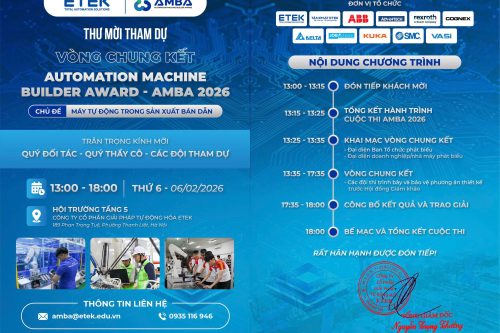
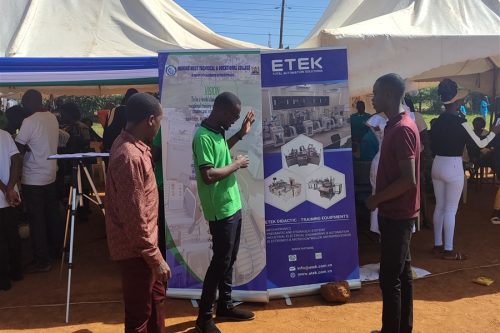
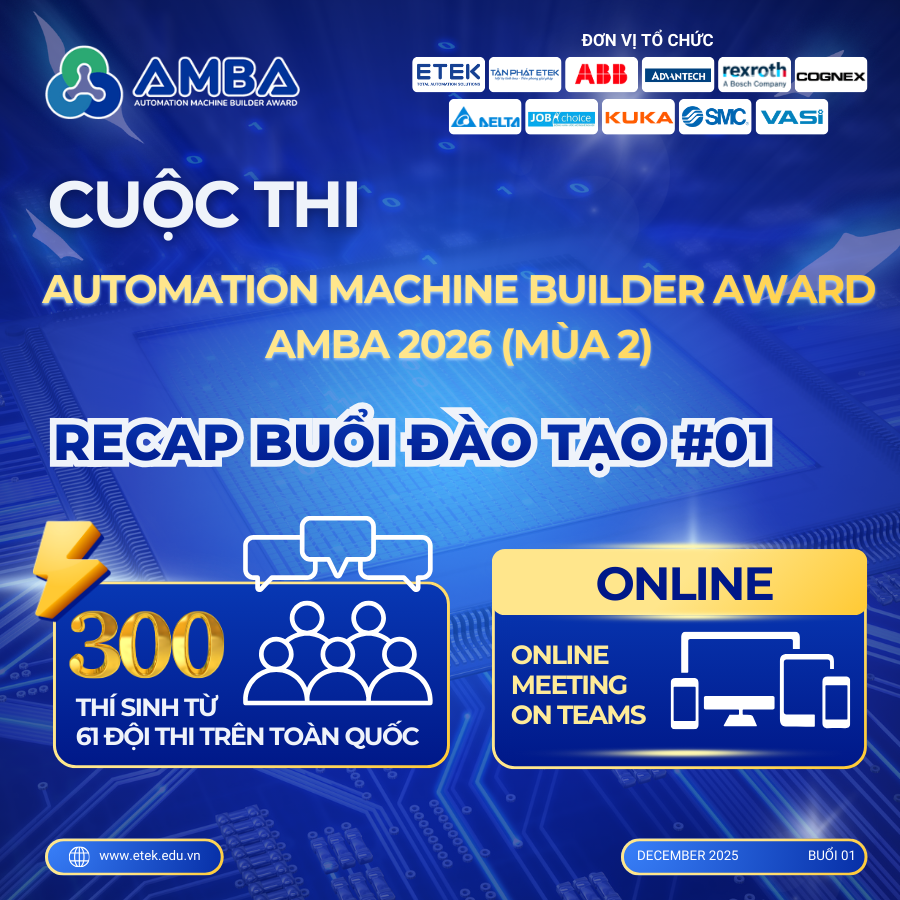
The Automation Machine Builder Award 2026 (AMBA 2026) launched Round 1 with a series of two specialized training sessions, attracting nearly 300 contestants from 61 teams across the country. This stage plays an important role in helping teams grasp key technologies, understand the requirements of the challenge, and establish a technical direction for their solution design process.
This year’s training program was supported by leading technology partners including ABB, Advantech, Bosch Rexroth, Cognex, Delta, KUKA, SMC, and the engineering team from ETEK.
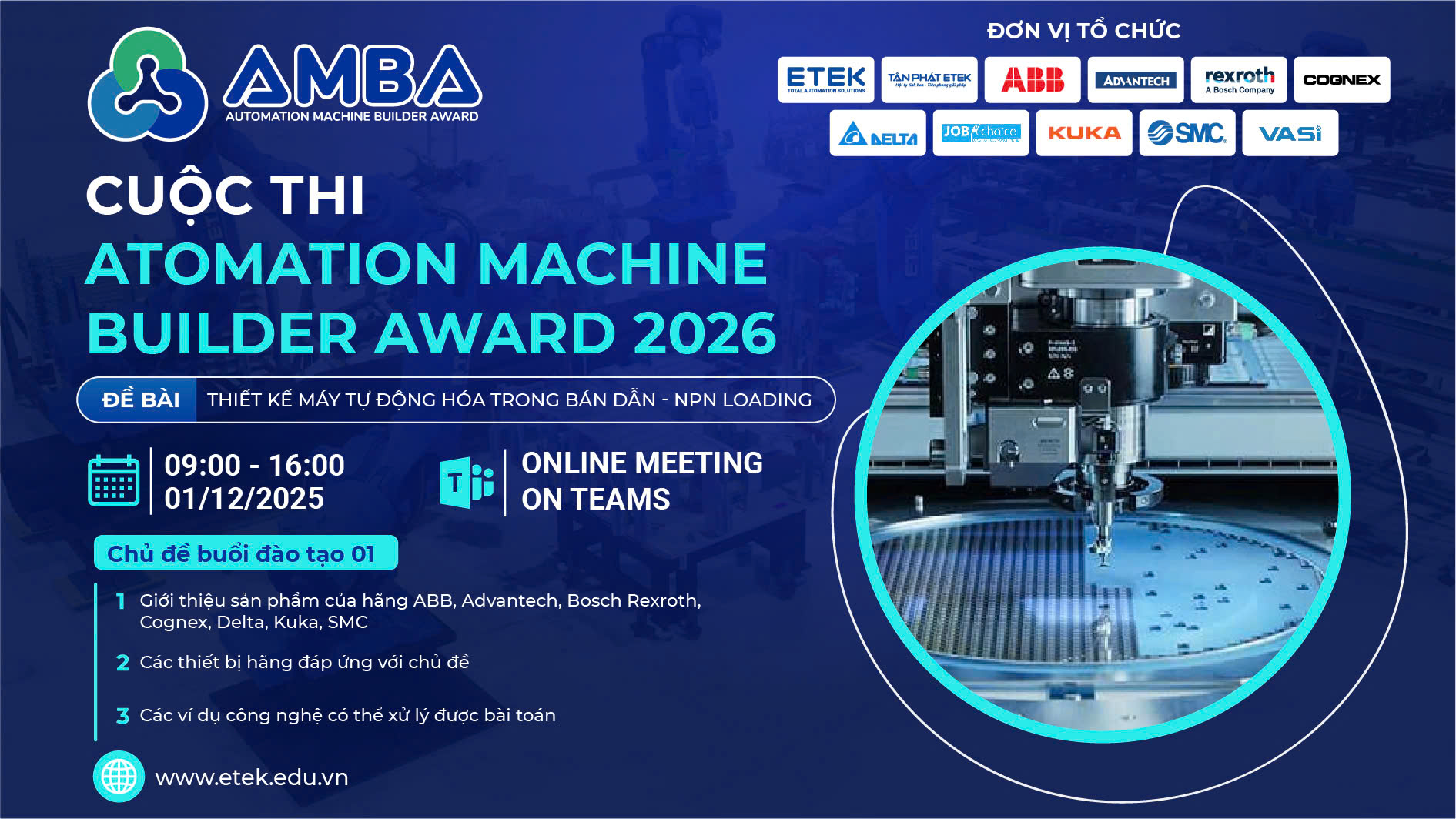
The first session provided an overview of essential equipment and technologies in the field of automation. Experts from ABB, Advantech, Bosch Rexroth, Cognex, Delta, and KUKA introduced their core product lines, operating principles, and real-world applications.
Key content included:
Introduction to equipment and technologies from ABB, Advantech, Bosch Rexroth, Cognex, Delta, and KUKA
Presentation of devices relevant to the challenge topic: “Designing an Automation Machine for Semiconductor Manufacturing – NPN Loading”
Realistic application scenarios to help teams visualize their solution orientation
Contestants engaged actively with experts on topics such as robotics, machine vision, motion control, and equipment selection, creating a proactive and constructive learning environment.
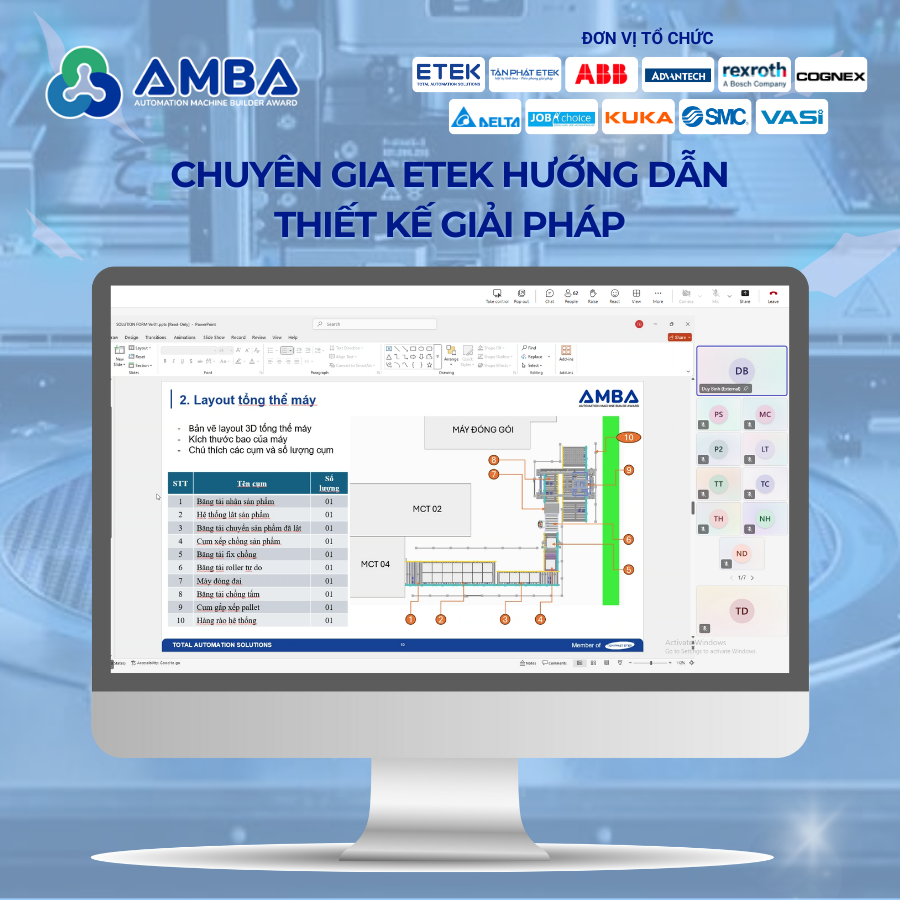
The second session focused on essential technical content for the solution development phase. With participation from SMC, Bosch Rexroth, and ETEK engineers, the training delivered practical and highly applicable guidance.
Key content included:
Introduction to pneumatic equipment and solutions from SMC, including valves, cylinders, controllers, and their applications in industrial motion
Insights from Bosch Rexroth on advanced knowledge supporting automation design
Guidance from ETEK on problem analysis, equipment selection, and structured steps for building a complete design solution
Through this session, teams began to shape appropriate approaches aligned with the competition requirements and laid the groundwork for upcoming design stages.
After completing the two training sessions, contestants gained:
Foundational knowledge of equipment systems related to the challenge
A clearer understanding of robotics, pneumatics, motion control, machine vision, and modern automation solutions
A methodological approach to the NPN Loading problem following industry-standard engineering processes
Increased confidence to begin developing ideas and preparing for the model design phase
Beyond technical instruction, the training series also created opportunities for contestants to engage directly with experts, broaden their technical perspectives, and enhance their capability to execute solution designs.